
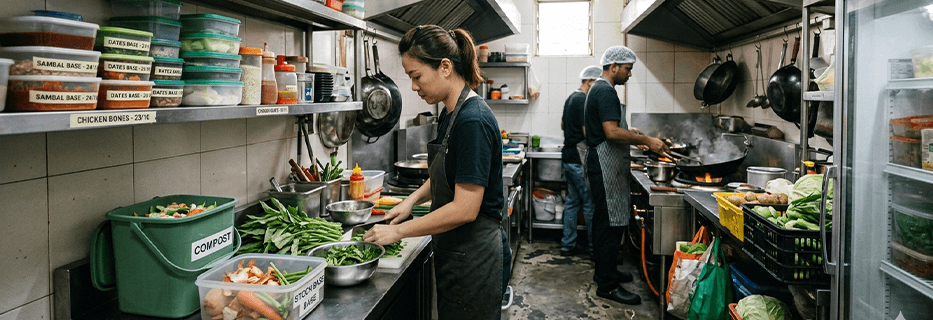
Every ringgit spent on ingredients that end up in the bin is a ringgit lost. For hawkers and small food operators, reducing food waste in the kitchen is one of the simplest ways to protect your margins, without raising your prices or cutting your menu.
The good news is that small changes in how you store, portion, and plan can make a real difference. Here are practical tips to help you waste less and save more.
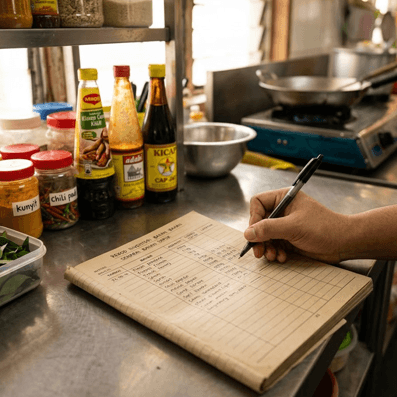
One of the biggest causes of food waste in small kitchens is buying too much without knowing what you already have. A basic tracker helps you monitor stock levels, track what moves fast, and avoid ordering duplicates.
Review your stock before every market trip. If you notice certain ingredients regularly go unused by the end of the week, it is a signal to either reduce your order quantity or find a way to use them up in your menu.
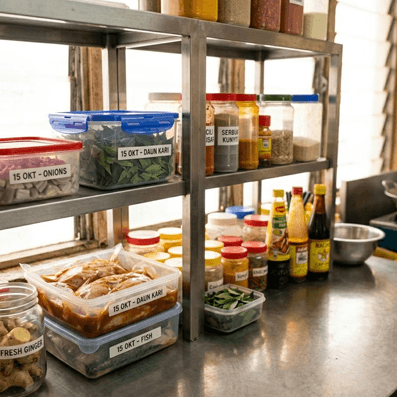
Proper storage extends the shelf life of your ingredients and reduces spoilage before you even get to use them. A few habits that help:
Small investments in proper storage containers pay off quickly when you start seeing less spoilage at the end of each day. For more detailed tips, you may refer to our tips for buying and storing bulk seasonings.
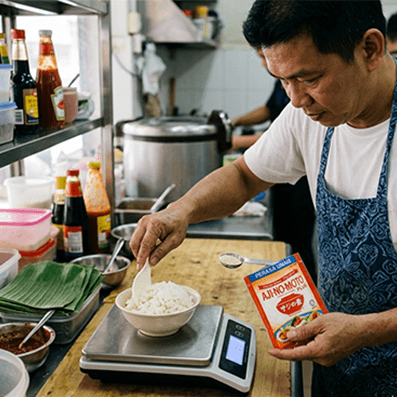
Inconsistent portioning is one of the most common and costly forms of food waste in hawker kitchens. When portions are too generous, ingredients run out faster than they should. When they are too small, customers are not satisfied.
Using a digital kitchen scale to standardise your portions helps you control how much goes into every dish. This is especially important for seasoning and sauces, where even a small difference in quantity affects both your cost and the consistency of your flavour. Products like AJI-NO-MOTO® PLUS are designed to deliver strong umami taste with less quantity used, meaning you get more servings per pack, which directly supports better cost control.
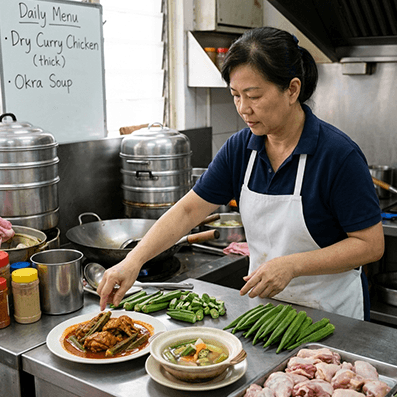
One of the smartest ways to reduce waste is to design your menu so that the same core ingredients appear across multiple dishes. If you use chicken in your main dish, plan a side or soup that uses the remaining parts. If you have leftover vegetables from lunch prep, work them into a stir-fry or soup for the next service.
This approach reduces the chance of ingredients sitting unused and keeps your purchasing focused. A tight, well-planned menu naturally produces less waste than one with many unrelated items requiring separate ingredient lists.
For practical recipe inspiration built around common hawker ingredients, browse the Recipe Biz collection for ideas on how to build dishes that share a base or seasoning profile.
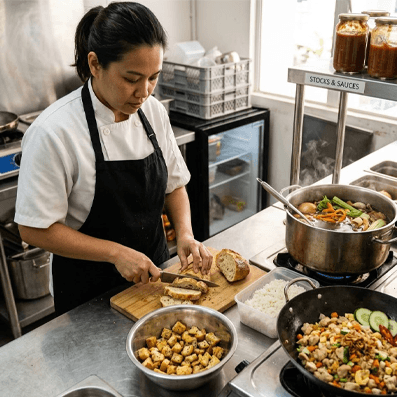
Before throwing anything away, ask whether it can still be used in a different form. Leftover cooked rice becomes nasi goreng. Day-old bread works well for croutons or bread-based sides. Vegetable trimmings can be turned into a stock base.
Getting creative with what you already have is not about cutting corners; it is about making full use of what you paid for. A sauce or dip made from ingredients nearing their end is a good example.
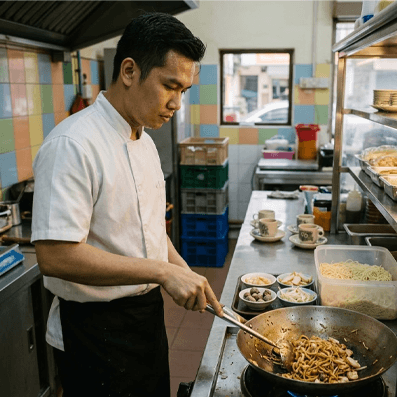
It is tempting to prepare large quantities in advance to save time, but overcooking is one of the most direct causes of food waste, especially during slower trading hours. A better approach is to cook in smaller batches and top up during service based on actual demand.
Track which time slots are consistently busy and which are slower. Over time, this helps you match your production volume to real customer flow, reducing the amount of food that does not get sold.
Reducing food waste is not just about being careful; it is a real business strategy that affects your bottom line every single day. Small, consistent habits around tracking, storing, portioning, and planning are what separate stalls that struggle with costs from those that stay profitable.
For more practical business tips and recipe ideas designed for small food operators, visit Ajinomoto Food Biz Partner and make sure to join our Loyalty Program to earn rewards on the ingredients that help you run a smarter, more cost-efficient kitchen.

Ajinomoto Food Biz Partner
Have a question? Contact us now!
