
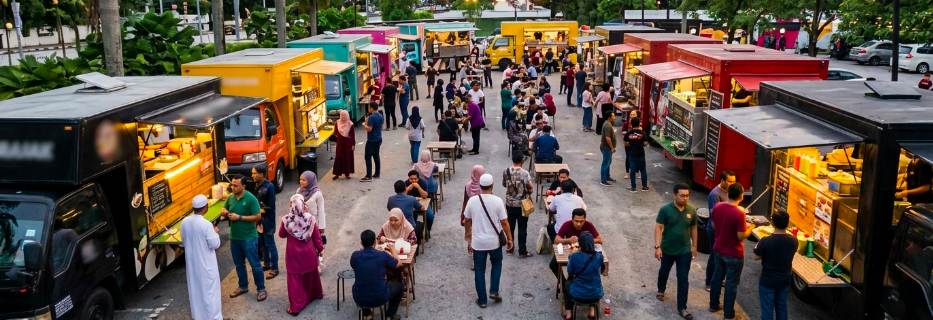
Starting a food truck sounds simple. Lower rent, smaller space, more mobility. Right?
Maybe.
But the reality is this. A profitable food truck runs on tight operations, strong margins, and strict compliance with local permits. Without these, even the best concept struggles.
In this guide, you will learn how to start food truck business operations properly. From understanding startup costs and navigating food truck license Malaysia requirements, to building a high-margin menu that actually works on the road.
Starting a food truck involves more than just buying a vehicle. Each component plays a role in how smoothly your business runs.
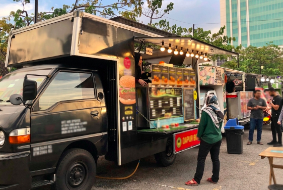
Your truck is your kitchen, storefront, and brand in one. Many operators begin with light commercial vehicles like Daihatsu Gran Max or Isuzu models, then customise them into mobile kitchens. Start small.
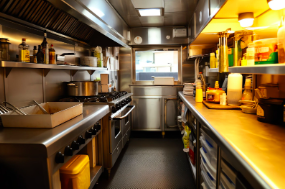
Space is limited, so every piece of equipment must earn its place. Most setups include a griddle, fryer, chiller, freezer, generator, and a proper exhaust system to meet safety standards.

Before operating, you will need approvals from multiple authorities. This includes local council permits, inspections, and health compliance requirements.

Daily operations continue even when sales slow down. Fuel, staff wages, ingredients, and maintenance costs must be covered consistently, especially during off-peak periods.
CATEGORY | ESTIMATED COST (RM) | NOTES |
Vehicle (used) | 35,000 – 70,000 | Daihatsu Gran Max, Isuzu D-Max or similar |
Vehicle (NEW) | 75,000 – 120,000 | Isuzu Elf NLR Pro, Mitsubishi Fuso Canter TF or similar |
Custom Fabrication + Kitchen Build | 40,000 – 100,000 | Counters, sinks, wiring, gas, branding wrap |
Kitchen Equipment | 20,000 – 60,000 | Griddle, fryer, chiller, freezer, generator, exhaust |
Permits + Licensing | 1,000 – 5,000 | Council fees, deposits, inspections |
Working Capital (3-6 months) | 30,000 – 80,000 | Fuel, staff, ingredients, rent, repairs |
TOTAL COST (Approx.) | MIN: 201,000 / MAX: 435,000 |
*Cost calculation is based on April 2026
Running out of cash during slow months is one of the biggest risks in this business. Planning your runway properly matters more than chasing fast sales.
Getting your food truck license Malaysia approved involves several steps. Each one is mandatory.

You must register your business with Suruhanjaya Syarikat Malaysia (SSM) before applying for any permits. EzBiz Online is the official platform for new business registrations.

The driver must hold a Goods Driving License (GDL), as food trucks are classified as commercial vehicles. Use Form JPJL8A for the vocational license application.

All food handlers must complete a certified training course and receive Typhoid injections from the Ministry of Health or KKM. These are non-negotiable for operating legally.
Alternatively, private providers like EduFood Training & Services, Al Barakah Training Solutions and SV Care Academy often bundle both services.

This is the main hurdle. You will need a “Lesen Penjaja Bergerak” from your local council such as DBKL or MBPJ. Some councils only allow operation in designated zones or food truck parks.
For DBKL, the Borang Permohonan Lesen Penjaja can be downloaded directly from their official website. Meanwhile, MBPJ offers an online option through their MBPJ Online Licensing Portal, where you can apply for the “Lesen Penjaja Smart Trak” or Food Truck License.
Operating outside approved areas can lead to fines or even confiscation of your truck. Always follow zoning rules.
A food truck cannot run like a restaurant with a long menu. Space, time, and manpower are limited.
The most effective menus are focused, efficient, and built around shared ingredients.
Design your menu so that most dishes share the same core ingredients. This reduces storage needs, lowers waste, and simplifies purchasing.
Prep as much as possible in a central kitchen. On the truck, aim to assemble each order in under two minutes.
Customers are often eating while standing or walking. Your food must be easy to handle, with packaging that keeps it neat without increasing cost.
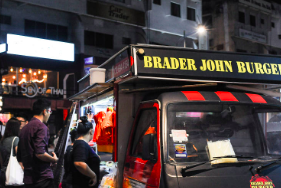
Focus on a small range of burgers and wraps using the same buns, proteins, and sauces. Variety comes from sauce combinations, not extra ingredients.
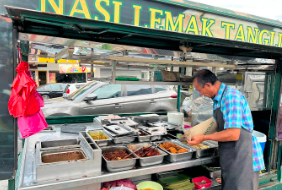
Offer familiar favourites like fried noodles or nasi lemak, but streamline prep by using shared sambal bases and pre-portioned ingredients.
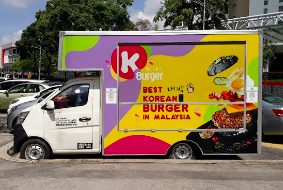
Build your menu around a few core items like fried chicken and rice bowls. Use the same sauces and sides across different dishes to maintain consistency.
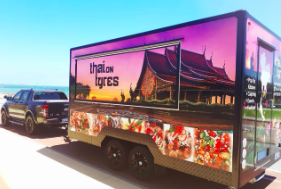
Keep it fast and refreshing with stir-fried noodles, grilled proteins, and simple drinks. Ingredients overlap across dishes, making prep easier and faster.
Where you park matters as much as what you serve.
Fixed spots at office parks or universities offer predictable traffic and easier planning, but sales may drop during weekends or holidays.
Event-based catering brings high volume and exposure, especially during festivals or corporate events, though income can be inconsistent between bookings.
Food truck parks are becoming more popular in Malaysia. Locations like TAPAK Urban Street Dining provide built-in crowds and handle much of the permit process, making them a practical starting point for new operators.
Local council fees usually range between RM1,000 to RM5,000, depending on location and requirements.
No. You MUST operate only in approved zones. Illegal parking can result in fines or your truck being seized.
Used trucks have a lower upfront cost but may require repairs. New builds cost more but offer better reliability and customization. events, though income can be inconsistent between bookings.
A food truck business is not just about good food. It is about structure, discipline, and smart decision-making.
With the right permits, a focused menu, and efficient operations, a food truck can grow into a scalable and profitable business.
If you are serious about starting, take the next step. Speak to a truck fabricator, prepare your business plan, and get expert advice on licensing before you hit the road.

Ajinomoto Food Biz Partner
Have a question? Contact us now!
